Simcenter 3D 2406 Free Download 2026
Simcenter 3D is an advanced engineering simulation software developed by Siemens. It is part of the Simcenter portfolio and is widely used by engineers and designers to analyze and predict product performance using advanced simulation techniques. The Simcenter 3D 2406 release introduced several improvements in simulation speed, modeling capabilities, and multiphysics integration, helping organizations develop high-quality products faster and with better accuracy.
Introduction to Simcenter 3D 2406
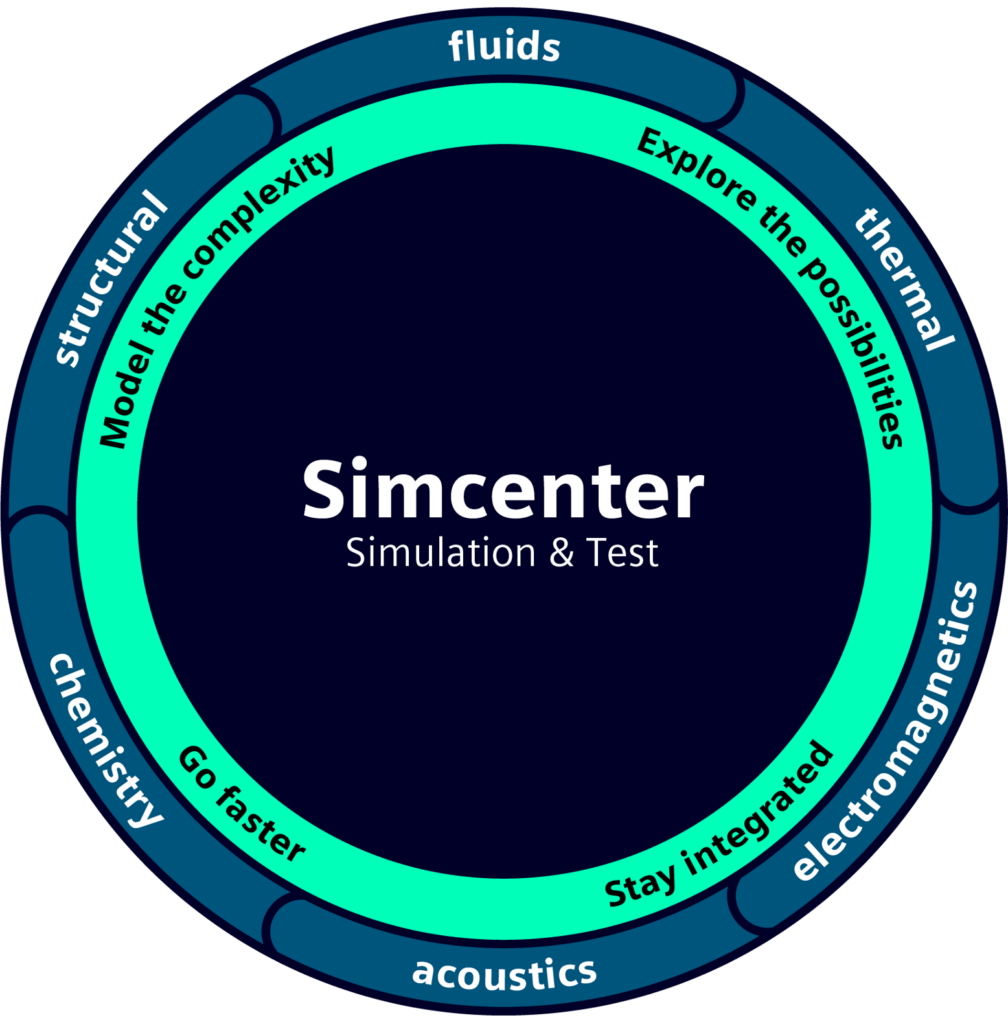
Simcenter 3D is a Computer-Aided Engineering (CAE) platform that allows engineers to simulate real-world behavior of products before they are physically manufactured. The software integrates multiple physics domains such as structural mechanics, thermal analysis, acoustics, motion, and electromagnetics into a single simulation environment.
The 2406 release focuses on improving modeling efficiency, simulation accuracy, and workflow automation. It provides enhanced tools for gear design, rotor dynamics, durability analysis, and meshing processes, making it easier for engineers to handle complex engineering problems.
Simcenter 3D Interface
The Simcenter 3D interface is designed to provide a unified environment for pre-processing, solving, and post-processing simulations.
Key Interface Elements
-
Engineering Desktop
-
Central workspace for simulation modeling.
-
Provides tools for geometry preparation and meshing.
-
-
Simulation Navigator
-
Displays the structure of simulation models.
-
Helps engineers manage loads, boundary conditions, and materials.
-
-
Visualization Tools
-
Enables viewing simulation results such as stress, deformation, and temperature distribution.
-
-
Integration with CAD
-
Direct integration with CAD systems like NX ensures design updates are synchronized with simulation models.
-
These tools simplify the workflow and reduce the time required for simulation preparation.
Key Features of Simcenter 3D 2406
The 2406 version introduces several powerful enhancements.
1. Smart Virtual Sensing for Durability Analysis
Smart Virtual Sensing is a new feature designed to improve durability testing.
This technology uses strain measurements and simulation data together to predict loads on mechanical components. Engineers can then analyze stress, fatigue, and safety factors more accurately.
Benefits include:
-
Reduced need for extensive physical testing
-
Improved durability predictions
-
Faster validation of mechanical designs
This approach allows engineers to simulate real-world loading conditions more effectively.
2. Advanced Gear Design Optimization
Simcenter 3D Motion now includes tools for gear design optimization.
The system can analyze:
-
Gear transmission efficiency
-
Noise and vibration levels
-
Mechanical strength
Using design space exploration, engineers can evaluate multiple gear designs automatically and select the best configuration.
This feature is especially useful for industries such as:
-
Automotive
-
Robotics
-
Aerospace
where gear performance directly affects product reliability.
3. Enhanced Rotor Dynamics Simulation
Rotor dynamics simulation is essential for equipment like turbines, compressors, and electric motors.
Simcenter 3D 2406 introduces:
-
Support for unsymmetric rotor models
-
Multiple harmonic vibration analysis
-
Improved frequency response calculations
These improvements help engineers understand vibration behavior and prevent failures caused by resonance or instability.
4. Improved Acoustic and NVH Analysis
Noise, vibration, and harshness (NVH) analysis is critical in modern product design.
Simcenter 3D 2406 enhances acoustic simulation by allowing engineers to import electromagnetic force data from electric motor models.
This helps simulate vibration and noise generated by motors more accurately.
Industries that benefit from this feature include:
-
Electric vehicle manufacturers
-
Industrial motor designers
-
Consumer electronics companies
5. Faster Meshing and Modeling Tools
Meshing is one of the most time-consuming tasks in simulation.
The new version introduces improved meshing tools, including:
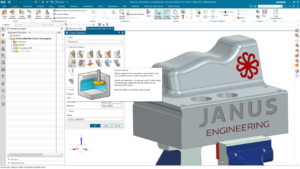
Box Imprinting Tool
This tool allows engineers to quickly generate structured mesh patterns around holes in a model.
Advantages:
-
Faster mesh creation
-
Improved mesh quality
-
Better simulation accuracy
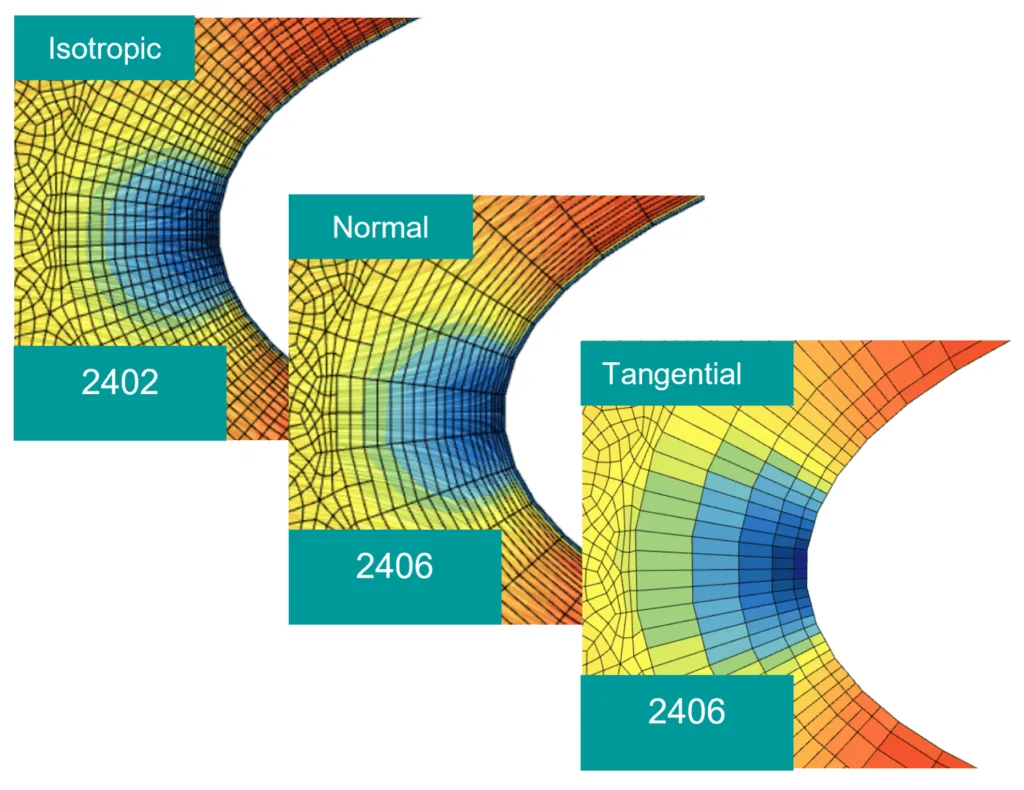
Touch Point Remesh
This feature allows engineers to locally remesh small areas of a model around a selected point.
It significantly reduces modeling time when adjusting mesh quality in critical regions.
These improvements help engineers create simulation models faster without sacrificing accuracy.
6. Faster Solver Performance
Simcenter 3D uses Simcenter Nastran as its main solver for structural analysis.
The 2406 version introduces improvements that make the solver up to 10% faster when solving large nonlinear contact models.
Benefits include:
-
Reduced simulation time
-
Improved computational efficiency
-
Ability to analyze larger models
For organizations running hundreds of simulations, this performance boost can save significant engineering time.
7. Multiphysics Simulation Integration
One of the strongest features of Simcenter 3D is its ability to simulate multiple physics domains together.
These include:
-
Structural mechanics
-
Thermal analysis
-
Fluid dynamics
-
Electromagnetics
-
Acoustics
Engineers can perform coupled simulations such as:
-
Thermal-mechanical analysis
-
Vibro-acoustic simulations
-
Electromagnetic-mechanical interactions
This integrated approach allows more realistic simulation of product behavior.
Modules in Simcenter 3D
Simcenter 3D contains several specialized modules.
Structural Simulation
Structural simulation evaluates how products respond to mechanical loads.
Engineers can analyze:
-
Stress and strain
-
Deformation
-
Buckling
-
Fatigue life
Applications include:
-
Aircraft structures
-
Automotive chassis
-
Industrial machinery components
Motion Simulation
Motion simulation allows engineers to analyze moving mechanical systems.
Capabilities include:
-
Multibody dynamics
-
Kinematic analysis
-
Drivetrain simulation
-
Gear and transmission analysis
This helps engineers predict how mechanisms behave under real operating conditions.
Thermal Simulation
Thermal analysis predicts how heat affects product performance.
Engineers can simulate:
-
Heat transfer
-
Thermal expansion
-
Cooling system performance
-
Temperature distribution
These simulations are critical in electronics, aerospace, and automotive industries.
Acoustic Simulation
Acoustic simulation evaluates noise generation and sound propagation.
Applications include:
-
Vehicle cabin noise
-
Machine noise reduction
-
Product sound quality optimization
This helps companies design quieter and more comfortable products.
Electromagnetic Simulation
Simcenter 3D also supports electromagnetic analysis for electrical devices.
Examples include:
-
Electric motors
-
Generators
-
Transformers
Engineers can simulate magnetic fields and electromagnetic forces to optimize device efficiency.
Design Optimization in Simcenter 3D
Simcenter 3D includes advanced optimization tools.
Engineers can perform:
-
Topology optimization
-
Design space exploration
-
Parameter optimization
These tools automatically explore different design configurations and identify the best solution.
Benefits include:
-
Reduced material usage
-
Improved structural performance
-
Faster product development
Integration with Digital Twin Technology
Simcenter 3D supports Digital Twin technology.
A digital twin is a virtual model of a physical product that evolves with real-world data.
Benefits include:
-
Predictive maintenance
-
Real-time performance monitoring
-
Improved product reliability
By combining simulation data with real-world measurements, engineers can continuously improve product performance.
Industries Using Simcenter 3D
Simcenter 3D is widely used across multiple industries.
Automotive Industry
Automotive companies use Simcenter 3D for:
-
Crash simulation
-
NVH analysis
-
Powertrain development
-
Electric vehicle design
Aerospace Industry
Aerospace engineers use the software for:
-
Structural analysis of aircraft components
-
Thermal analysis of spacecraft
-
Rotor dynamics simulation
Energy Industry
Energy companies use Simcenter 3D to analyze:
-
Turbines
-
Wind generators
-
Power plant equipment
Manufacturing Industry
Manufacturers use the software for:
-
Additive manufacturing simulation
-
Structural analysis of machines
-
Product optimization
Benefits of Simcenter 3D 2406
Simcenter 3D offers several advantages for engineering teams.
Faster Product Development
Simulation allows engineers to test designs virtually, reducing the need for physical prototypes.
Improved Product Quality
Advanced analysis helps detect design issues early in the development process.
Reduced Costs
Virtual testing reduces manufacturing and testing expenses.
Better Collaboration
Integration with data management systems allows teams to share simulation results easily.
Future of Simulation with Simcenter
Engineering simulation is becoming increasingly important as products become more complex.
Technologies shaping the future of simulation include:
-
Artificial Intelligence
-
Digital Twins
-
Cloud simulation
-
Real-time testing
Simcenter 3D is continuously evolving to support these technologies and help engineers develop innovative products faster.
Conclusion
Simcenter 3D 2406 represents a major advancement in engineering simulation technology. With improved meshing tools, enhanced solver performance, advanced durability analysis, and multiphysics simulation capabilities, it provides engineers with powerful tools to design and validate products virtually.
The software helps organizations reduce development time, improve product reliability, and stay competitive in industries where innovation and efficiency are critical.
As engineering challenges become more complex, simulation platforms like Simcenter 3D will continue to play a vital role in product development and digital transformation.
Altair HyperWorks 2025 (v2025.0)
Simcenter 3D 2406 Free Download 2026