KeyCreator 2025 (v2025.0): Latest Direct CAD Release Download
KeyCreator—the long-standing direct modeling CAD solution from Kubotek Kosmos—continues to evolve as a powerful tool for design, manufacturing, and engineering professionals. Known for its history-free modeling paradigm, unmatched interoperability, and flexible workflows, KeyCreator 2025 delivers enhancements in performance, translation technology, productivity, and usability that expand its value across industries ranging from aerospace tooling and machining to product design and fabrication.
This article explores what makes KeyCreator 2025 (v2025.0) distinct, what’s new and improved, who uses it, how it fits into modern engineering environments, and where it’s headed next.
1. What Is KeyCreator? — The Foundation
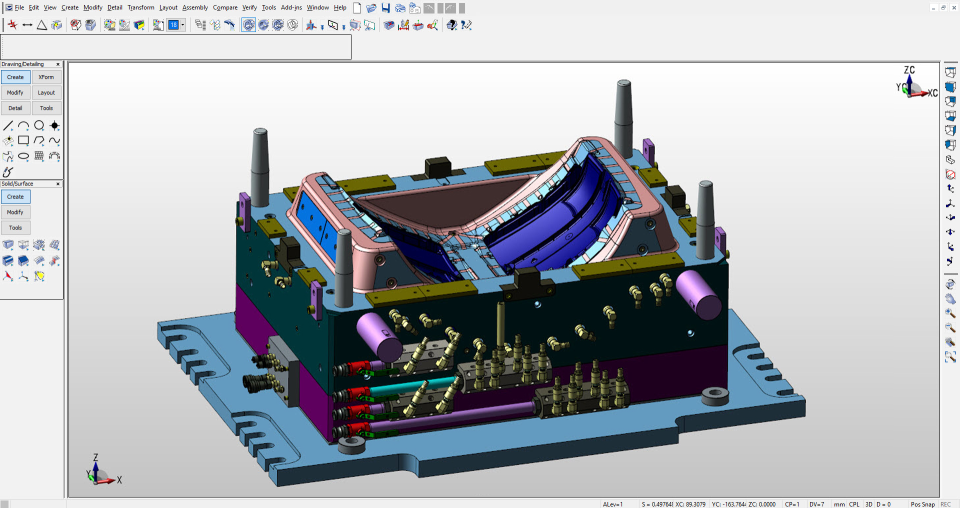
KeyCreator is a computer-aided design (CAD) system developed by Kubotek Kosmos that supports both 2D and 3D modeling and drafting. Unlike many mainstream CAD systems that rely on parametric history trees, KeyCreator instead uses a direct modeling approach — meaning users can interact with geometry without constraints tied to a modification history. This makes it especially appealing for engineers and fabricators who need rapid design edits or conversion work, or who deal with legacy CAD data from various sources.
KeyCreator is widely used for:https://scorpioagersoftware.com/
-
Direct 3D modeling and conceptual design
-
Detailed drafting and documentation
-
Multi-CAD data reuse and translation
-
Tooling, fixtures, and manufacturing engineering
-
Importing and editing legacy files without rebuilds
The software family includes editions such as KeyCreator Pro, KeyCreator Prime, and KeyCreator Drafting, each tailored to different workflows — from advanced modeling and translation needs (Pro) to essential CAD functions (Drafting).
2. The Philosophy of Direct Modeling
One of KeyCreator’s core differentiators is that it doesn’t depend on feature history or parametric constraints to define a model. Instead:
-
Geometry remains editable at any time
-
Changes can be made without rebuilding a model tree
-
Imported parts can be modified without regeneration failures
This gives engineers flexibility when working with complex or poorly documented CAD data, or when design intent changes midstream — a common challenge when collaborating with external suppliers or integrating legacy projects.
3. What’s New in KeyCreator 2025 (v2025.0)
The 2025 release of KeyCreator focuses on three strategic pillars:
-
Unified and powerful translation technology
-
User experience and productivity enhancements
-
Improved interoperability and drafting workflows
Let’s examine these in detail.
3.1. Kosmos Connected — Next-Generation File Translation
Perhaps the most transformative change in KeyCreator 2025 is the complete transition of all native CAD translators — from major commercial systems — to be based on the Kubotek Kosmos 3D Framework.
This framework is the same geometric translation technology that underpins many advanced engineering and validation workflows in aerospace and manufacturing, known for high-fidelity boundary representation (B-Rep) translation and robust handling of Product Manufacturing Information (PMI) and geometric tolerances.
Key impacts of this transition include:
-
Higher fidelity import and export of native CAD data from platforms such as CATIA, SolidWorks, Siemens NX, PTC Creo, Inventor, Rhino, Parasolid, JT, and more
-
Improved performance — including significantly faster import times for large or complex STEP, IGES, and IFC files (up to ~80% speed increases)
-
Smaller installer and update footprint since the Kosmos system consolidates translators into a unified technology stack
By centralizing on the Kosmos 3D Framework, KeyCreator 2025 makes cross-CAD reuse more reliable and efficient — a key requirement in multi-CAD engineering environments.
3.2. Enhanced User Experience
KeyCreator 2025 brings several improvements to make everyday CAD tasks smoother:
High-Resolution Display Support
The interface now scales effectively on modern high-resolution (4K and above) monitors — including clearer toolbars, cleaner text legibility, and sharper dialog layouts. This supports users with modern workstations and large format displays.
Smarter Dialog Behavior
Dialog boxes in the interface now remember the last viewed tab or page, saving time when users perform repetitive tasks.
Fastener Sets
A new modeling feature allows placement of correlated objects such as fasteners, nuts, and washers in one cohesive workflow — streamlining what would otherwise be a repetitive and error-prone set of modeling steps. This is particularly useful in mechanical design and assembly context.
3.3. Integration with External Tools
KeyCreator 2025 enhances its ecosystem connectivity through integrations such as:
CADENAS 3Dfindit
Users can now search part libraries from within the KeyCreator environment or via the CAD SCOUT browser extension, bringing common mechanical components into projects rapidly.
Revware MicroScribe® CMM Support
Integration with CMM devices allows coordinate data to be fed directly into KeyCreator drawing or modeling functions — effectively enabling hardware-assisted 3D sketching. This can augment reverse-engineering workflows and physical measurement capture.
3.4. Drafting and Document Enhancement
KeyCreator’s drafting capabilities receive user-requested improvements. A notable example includes the ability to change the color of detail callouts to visually emphasize specific design revisions or critical regions in 2D documentation.
This enhances communicative clarity — especially when sharing drawings with manufacturing or manufacturing inspection teams.
4. Service Packs and Ongoing Improvement
After the core 2025 release, Service Pack 1 and Service Pack 2 brought further refinement:
1 Highlights
-
Upgraded translators for Siemens formats, including Parasolid X_T (v37) and JT (v10.10)
-
Enhanced PDF export with multi-page outputs showing model and drawing layouts
-
Correction of dozens of miscellaneous issues to stabilize workflows
2 Enhancements
-
Broader importer support for updated native formats from SolidWorks, CATIA, NX, and Solid Edge
-
New support for Fusion 360 3D data import when using the highest license tier
-
Balloon annotation formatting improvements (color, attributes)
-
Better units handling in mass property calculations
-
Fastener Sets updated to include up to four washers for complex hardware sets
Service packs demonstrate Kubotek’s commitment to responding to user feedback and keeping translation and modeling ecosystem compatibility current.
5. Core Capabilities and Workflows
KeyCreator 2025 delivers value across several core use cases.
5.1. Direct 3D Modeling
At its heart, KeyCreator supports direct solid modeling, surface creation, and editing — allowing users to rapidly construct parts without worrying about a rigid history tree. This empowers engineers to:
-
Modify geometry interactively
-
Push/pull surfaces and solids
-
Handle imported models with minimal structural constraints
Direct modeling makes design iteration fast and less error-sensitive.
5.2. Multi-CAD Interoperability
One of KeyCreator’s strongest advantages is support for a wide range of CAD file formats — from native system formats to neutral standards such as STEP, IGES, and IFC.
Thanks to the Kosmos translators, engineers can import and re-use parts from Siemens, Dassault, PTC, Autodesk, and other platforms without losing geometric or drawing fidelity. This is crucial in industries where design cycles involve multiple CAD systems.
5.3. Drafting and Documentation
KeyCreator’s drafting tools are robust enough to create manufacturing drawings directly from 3D models. With improvements such as custom callout color control and advanced PDF export options, detailed documentation that aligns with shop-floor requirements is easier to produce.
5.4. Legacy Data Handling
Many companies possess decades of CAD data from outdated systems like CADKEY or earlier formats that plug poorly into modern parametric systems. KeyCreator’s direct editing and flexible import engine make rediscovering and reusing legacy geometry straightforward — reducing the need to recreate designs from scratch.
6. Who Uses KeyCreator 2025?
KeyCreator is often selected by organizations looking for:
-
High-precision engineering and tooling shops
-
Machinery and mechanical product designers
-
Fabrication and shop floor engineers
-
Multi-CAD environments and legacy data recovery projects
-
Aerospace and defense contractors where precise geometric reuse is essential
It thrives in contexts where flexibility and interoperability outweigh the need for rigid parametric constraint systems.
7. Strengths and Limitations
Strengths
-
Direct, history-free modeling for ease of design changes
-
Best-in-class CAD translation via the Kosmos framework
-
Responsive drafting and documentation tools
-
Flexible workflows for legacy and multi-CAD data
-
CMM and parts library integrations to support specialized workflows
Limitations
-
No native cloud-based collaboration infrastructure — KeyCreator is a desktop Windows-centric tool
-
Surface modeling for advanced freeform shapes remains less developed compared to some high-end parametric or dedicated surfacing tools
-
Steeper learning curve for users unfamiliar with history-free paradigms
These limitations reflect KeyCreator’s niche emphasis on flexibility and translation rather than full parametric automation.
8. How It Compares to Other CAD Paradigms
| Aspect | KeyCreator 2025 | Parametric CAD (e.g., SolidWorks) | Cloud CAD (e.g., Onshape) |
|---|---|---|---|
| Modeling Philosophy | Direct, history-free | Parametric, history-driven | Parametric, cloud native |
| Multi-CAD Support | Best-in-class | Good | Moderate |
| Legacy Data Handling | Excellent | Challenging | Poor |
| Collaboration | Local | Local | Real-time cloud |
| Drafting Tools | Strong | Strong | Improving |
| Surface/Organic Modeling | Moderate | Advanced | Moderate |
KeyCreator excels in interoperability and direct modeling flexibility, while parametric CAD offers stronger automation and feature control, and cloud CAD prioritizes remote collaboration.
9. Future Outlook
Although KeyCreator 2025 is focused on core usability and translation technology, trends to watch include:
-
Enhanced visualization support (such as VR/AR integration)
-
AI-powered geometry correction and validation
-
More direct export capabilities to CAM and simulation platforms
-
Stronger collaboration workflows between desktop and cloud environments
Kubotek’s ongoing service pack model suggests iterative enhancements that respond directly to industry and customer needs.
10. Conclusion
KeyCreator 2025 (v2025.0) marks a strategic evolution of the product line — anchored by the adoption of the Kosmos 3D Framework for translation, significant productivity and UX upgrades, improved interoperability, and continued refinement through service packs. With its direct modeling paradigm and robust legacy data handling, KeyCreator remains a valuable tool in sectors where flexibility, cross-CAD reuse, and engineering precision are top priorities.
Whether working with legacy data, needing to reuse complex models from varied CAD sources, or producing detailed manufacturing documentation, KeyCreator 2025 provides a flexible and capable environment that bridges many of the common challenges in contemporary CAD workflows.