BricsCAD BIM 2025 (v25.1) — A Flexible BIM Solution Built on Familiar CAD Foundations
BricsCAD BIM 2025 (version 25.1) represents an advanced evolution of BIM design software that combines powerful building modeling, data-driven workflows, and the familiar drafting environment of traditional CAD. Developed by Bricsys (part of Hexagon), BricsCAD BIM offers a cost-effective, flexible platform for architects, engineers, and construction professionals who want intelligent BIM without the steep learning curve typically associated with other BIM systems.

The 2025 release focuses on enhanced performance, improved automation, stronger interoperability, and refined documentation tools — making the software a compelling choice for building professionals working on projects of all scales.
What Is BricsCAD BIM 2025 (v25.1)?
BricsCAD BIM 2025 (v25.1) is a Building Information Modeling (BIM) solution built on the powerful BricsCAD platform. Unlike traditional BIM tools that require users to switch between disparate interfaces or environments, BricsCAD BIM stays within a familiar CAD-like workspace. This significantly reduces the learning curve for users already experienced in CAD workflows.
At its core, BricsCAD BIM combines intelligent modeling, construction documentation, and data-driven building insights — all in a single software environment.
Key Features of BricsCAD BIM 2025
Intelligent BIM Modeling
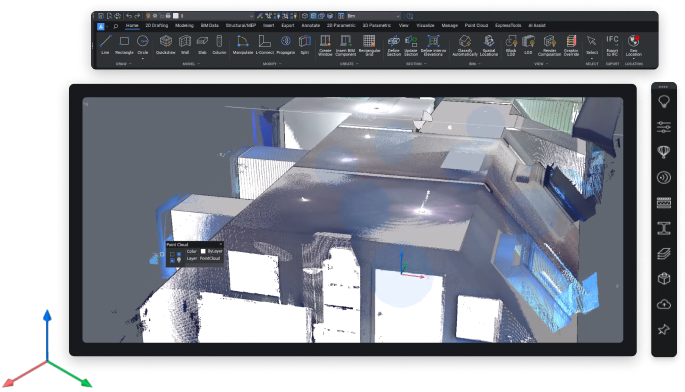
BricsCAD BIM 2025 features an intelligent modeling engine that allows users to create building elements such as walls, slabs, roofs, windows, doors, and structure components with real-world data attached. These elements incorporate material properties, dimensions, classifications, and functional relationships, meaning model changes automatically propagate throughout all views and documentation.
The intuitive modeling tools support both architectural and structural elements, enabling multidisciplinary coordination within the same environment.
BIM Workflows Powered by AI and Automation
A standout advantage of BricsCAD BIM is its use of AI-assisted tools that automate repetitive tasks. For example, the software can automatically classify elements, generate floor slabs from room boundaries, and organize model structures intelligently — saving time and reducing manual effort.
This automation is especially useful in early design phases where rapid iteration is critical.
BricsCAD Familiarity with BIM Intelligence
Users familiar with classic CAD commands will find the transition to BricsCAD BIM natural. The interface remains consistent with the broader BricsCAD ecosystem, allowing professionals to draft, model, annotate, and manage BIM data without switching tools.
This design philosophy appeals to firms that want BIM power without needing full retraining.
Enhanced Documentation and Annotation Tools
BricsCAD BIM 2025 strengthens the documentation workflow by offering automated drawing generation from the BIM model. Users can produce:
-
Plans
-
Elevations
-
Sections
-
Schedules and annotations
-
Quantity take-offs
These drawing sets remain dynamically linked to the BIM model, so any design adjustment automatically updates documentation, minimizing errors and rework.
Open Standards and Interoperability
BricsCAD BIM 2025 supports open standards such as IFC (Industry Foundation Classes), enabling seamless data exchange with other BIM and CAD platforms. It also handles common file formats such as DWG, making collaboration with consultants and project partners more efficient.
This open approach aligns with modern project delivery environments where multiple disciplines and toolchains coexist.
Parametric Components and Dynamic Assemblies
The software allows parametric component creation, meaning users can develop custom building parts that adapt to changes in design conditions automatically. Doors, windows, facade elements, and structural components can be defined parametrically, saving time and increasing design flexibility.
What’s New in Version 25.1?
The 2025 update focuses on performance enhancements, better BIM automation, and improved documentation tools:
-
Faster model performance and graphics responsiveness
-
Enhanced AI-driven classification and element recognition
-
Improved IFC export/import accuracy
-
Optimized parametric editing tools
-
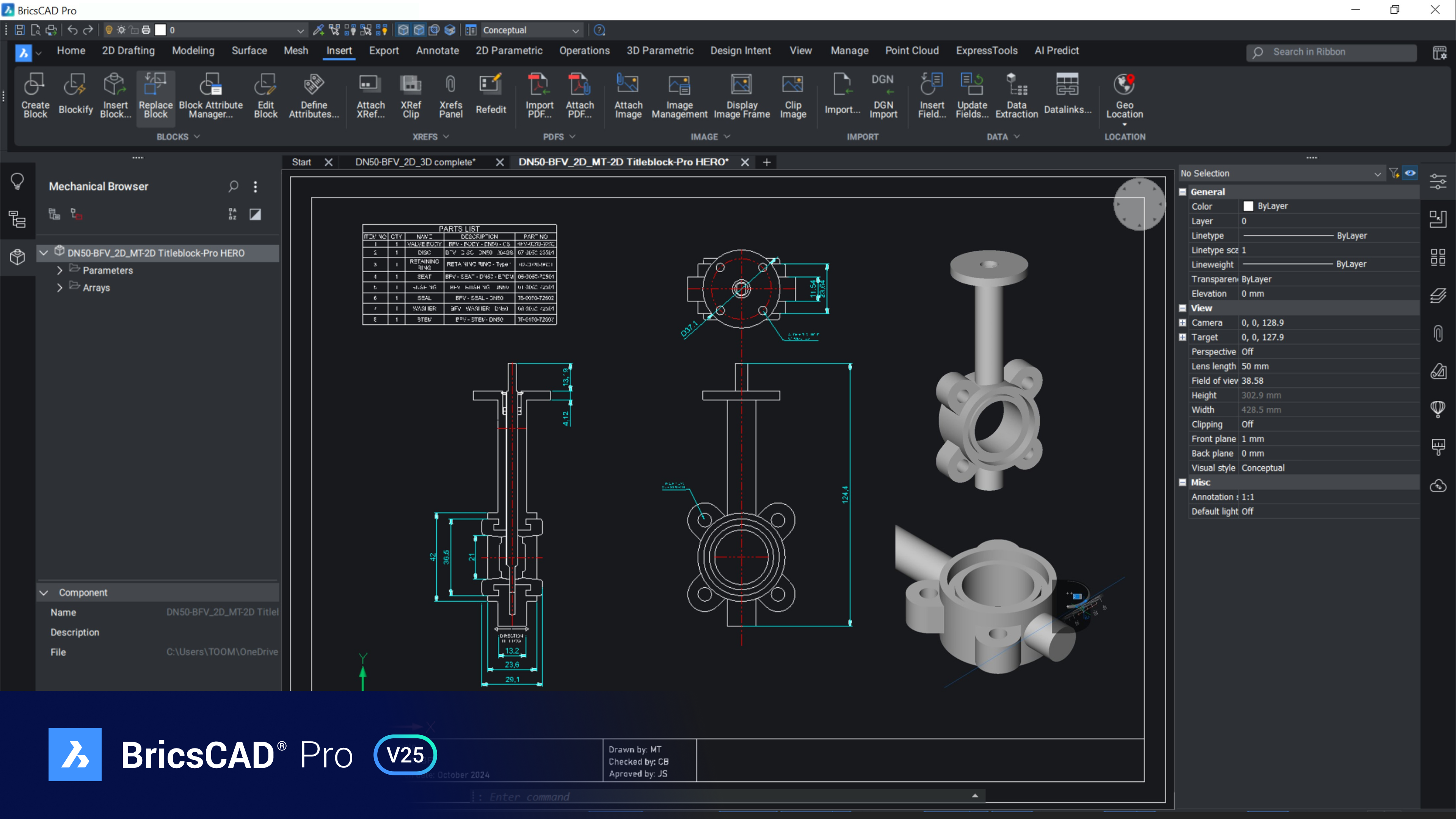
Smoother integration with BricsCAD Mechanical and BricsCAD Sheet Metal
These updates aim to boost overall productivity and strengthen multidisciplinary workflows.
Benefits of Using BricsCAD BIM 2025
Familiar CAD Environment with BIM Intelligence
The biggest advantage of BricsCAD BIM is that it brings powerful BIM capabilities into a familiar CAD interface. This shortens the learning curve and reduces onboarding time for CAD users transitioning to BIM workflows.
Cost-Effective BIM Solution
Compared to many traditional BIM platforms, BricsCAD BIM offers a more cost-effective licensing model — ideal for small firms, freelancers, and studios that want robust BIM tools without high subscription costs.
Automated Workflows Save Time
AI-assisted automation and smart modeling tools reduce repetitive tasks. Designers can focus more on creative work and less on manual drafting or data entry.
Enhanced Interoperability
With strong IFC support and DWG compatibility, BricsCAD BIM integrates well with other design and engineering tools, making collaboration seamless across teams and disciplines.
Who Should Use BricsCAD BIM 2025?
BricsCAD BIM 2025 is suited for:
-
Architects and architectural studios
-
BIM coordinators and managers
-
Structural engineers expanding into BIM
-
Small and medium firms transitioning from CAD to BIM
-
Professionals seeking flexible BIM workflows without steep costs
Whether working on residential developments, commercial structures, or renovation projects, BricsCAD BIM provides a flexible and powerful toolset.
Conclusion
BricsCAD BIM 2025 (v25.1) combines intelligent BIM modeling with a familiar CAD interface, delivering a versatile solution for building professionals. Its focus on automation, performance, interoperability, and documentation makes it an attractive choice for firms seeking a practical and cost-effective BIM platform.
By integrating BIM intelligence into a CAD-based workflow, BricsCAD BIM empowers designers and engineers to create accurate models, automate repetitive tasks, and maintain tight control over documentation — all within one unified environment. Its balance of BIM power and usability continues to position it as a compelling option in the evolving landscape of architectural and construction software.