Autodesk CFD 2026..0.0 Free Download With New Features
Autodesk CFD is a simulation tool that allows engineers to analyze fluid flow, heat transfer, and thermal performance of products. It helps identify potential design problems early in the product development process.
Unlike traditional physical testing, CFD simulation allows engineers to run multiple tests quickly without building expensive prototypes. This significantly reduces both development time and cost.
Autodesk CFD integrates smoothly with many popular CAD platforms, including:

-
Autodesk Inventor
-
AutoCAD
-
SolidWorks
-
PTC Creo
This integration allows engineers to import designs directly from CAD models and begin simulations quickly.
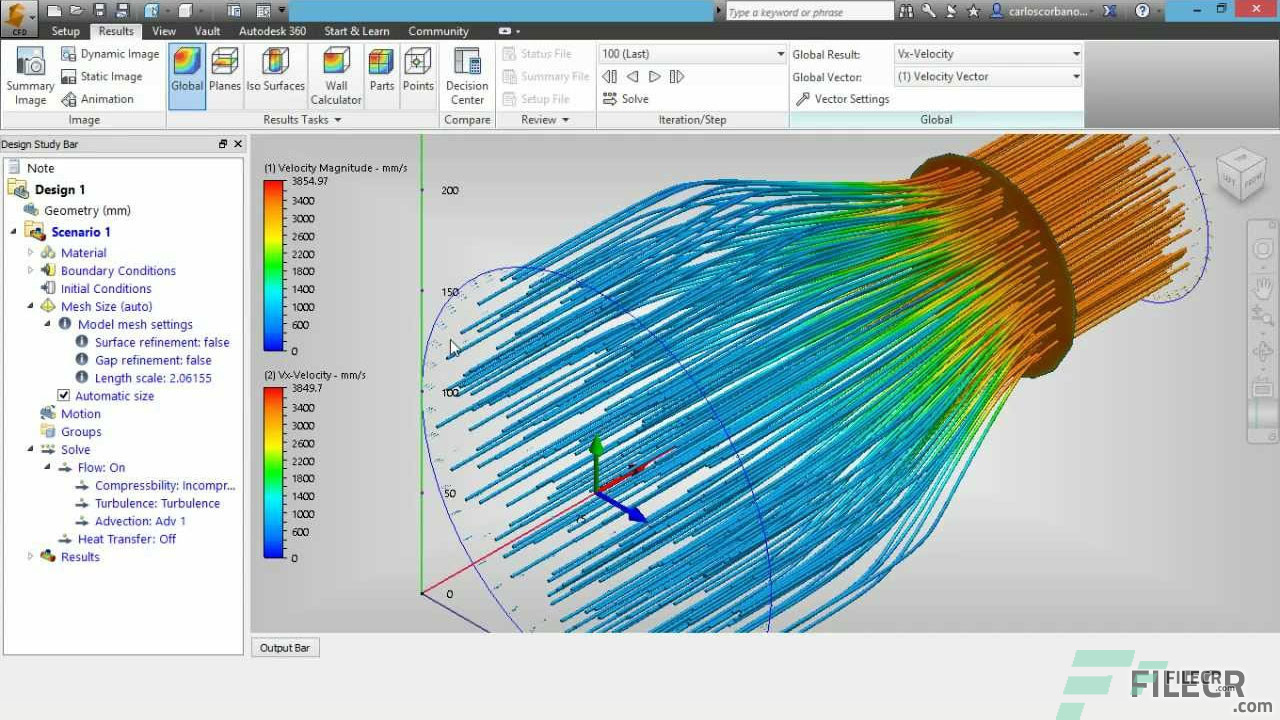
Autodesk CFD 2025 Interface
The interface of Autodesk CFD is designed to simplify the simulation process for engineers and designers.
Key Components of the Interface
1. Design Study Bar
This area manages simulation scenarios and design variations. Engineers can test multiple design versions to compare performance results.
2. Model Preparation Tools
These tools allow users to:
-
Clean geometry
-
Define materials
-
Assign boundary conditions
-
Prepare models for simulation
3. Solver Control Panel
The solver processes the simulation calculations. Autodesk CFD provides real-time feedback so users can monitor simulation progress.
4. Results Visualization
After the simulation is completed, results are displayed using:
-
Color contour plots
-
Velocity vectors
-
Temperature maps
-
Flow streamlines
These visual tools make it easy to understand how fluids move within a design.
Key Features of Autodesk CFD 2025
Autodesk CFD 2025 introduces several enhancements that improve simulation accuracy, usability, and speed.
1. Advanced Fluid Flow Simulation
One of the most important features of Autodesk CFD is its ability to simulate complex fluid flows.
Engineers can analyze:
-
Airflow around vehicles
-
Liquid movement in pipes
-
Cooling airflow in electronic devices
-
Ventilation systems in buildings
The software uses advanced numerical algorithms to solve the governing equations of fluid dynamics.
2. Heat Transfer Analysis
Thermal management is critical in many products, especially electronic devices and mechanical systems.
Autodesk CFD allows engineers to simulate different types of heat transfer:
-
Conduction
-
Convection
-
Radiation
For example, engineers can analyze how heat moves through a computer processor and evaluate cooling solutions before manufacturing the device.
3. Parametric Design Studies
One of the most powerful features of Autodesk CFD 2025 is parametric analysis.
This feature allows engineers to automatically test multiple design variations.
Examples include:
-
Changing fan size
-
Modifying airflow channels
-
Adjusting cooling fin dimensions
The software runs multiple simulations and identifies which design performs best.
4. Electronics Cooling Simulation
Modern electronics generate significant heat, which must be controlled to prevent performance loss or damage.
Autodesk CFD provides specialized tools for electronics cooling analysis.
Engineers can simulate:
-
Heat sinks
-
Circuit boards
-
Cooling fans
-
Airflow inside electronic enclosures
These simulations help designers improve reliability and extend product lifespan.
5. HVAC System Analysis
Autodesk CFD is widely used in building engineering to simulate HVAC performance.
Engineers can analyze:
-
Air distribution inside buildings
-
Ventilation performance
-
Thermal comfort
-
Smoke movement during fire scenarios
Architects and engineers use these simulations to design more efficient and comfortable buildings.
6. Wind Load Analysis
Another important application of Autodesk CFD is wind load simulation.
This feature helps engineers understand how wind affects structures such as:
-
Skyscrapers
-
Bridges
-
Stadiums
-
Industrial buildings
By simulating wind pressure and airflow patterns, engineers can design safer and more stable structures.
7. Cloud Simulation Support
Autodesk CFD 2025 supports cloud computing, allowing engineers to run simulations on powerful remote servers.
Benefits include:
-
Faster simulation results
-
Reduced demand on local hardware
-
Ability to run multiple simulations simultaneously
This feature is particularly useful for organizations running complex engineering analyses.
Simulation Workflow in Autodesk CFD
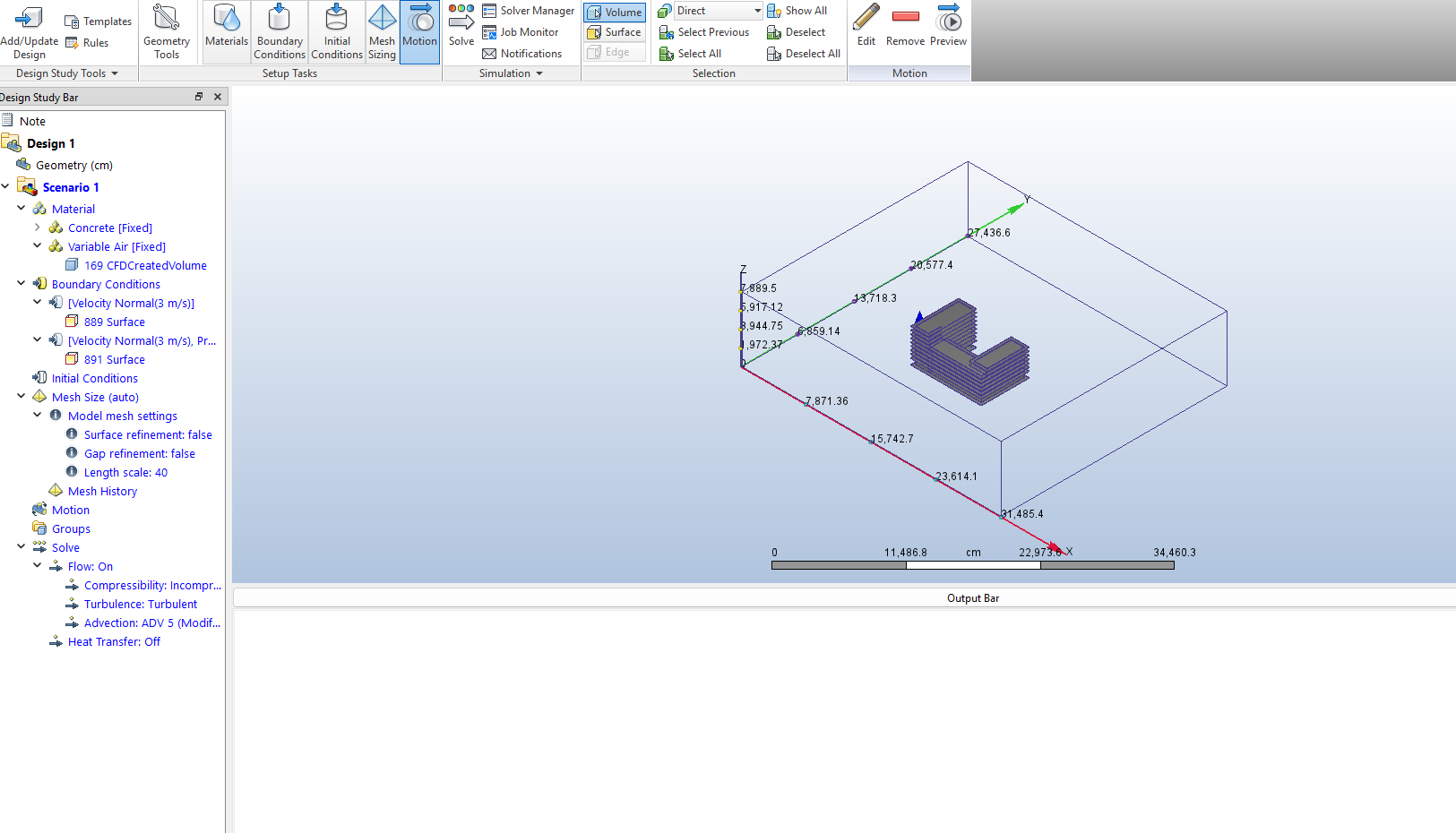
The simulation process in Autodesk CFD follows several steps.
1. Import CAD Model
Engineers import geometry from CAD software such as Autodesk Inventor or AutoCAD.
2. Define Materials
The user assigns materials such as aluminum, steel, plastic, or air to different components.
3. Set Boundary Conditions
Boundary conditions define how fluids interact with the model.
Examples include:
-
Inlet velocity
-
Outlet pressure
-
Wall temperature
-
Heat sources
4. Mesh Generation
The software automatically creates a computational mesh that divides the model into small elements.
The mesh allows the solver to perform numerical calculations.
5. Run Simulation
The solver calculates fluid flow and heat transfer behavior using numerical methods.
6. Analyze Results
Results are displayed using graphical visualization tools, allowing engineers to identify design improvements.
Industries Using Autodesk CFD
Autodesk CFD is used across many industries for product design and optimization.
Automotive Industry
Automotive engineers use CFD to analyze:
-
Vehicle aerodynamics
-
Engine cooling
-
Cabin airflow
-
Battery cooling in electric vehicles
Improving aerodynamics helps reduce fuel consumption and improve vehicle performance.
Aerospace Industry
CFD simulations are essential for aerospace engineering.
Engineers use Autodesk CFD to analyze:
-
Aircraft aerodynamics
-
Jet engine cooling
-
Cabin airflow
-
Heat transfer in spacecraft systems
These simulations help ensure safety and performance in aircraft design.
Electronics Industry
Electronic devices generate heat that must be managed efficiently.
CFD helps engineers optimize cooling systems in:
-
Computers
-
Smartphones
-
Data centers
-
Power electronics
Architecture and Construction
Architects and engineers use Autodesk CFD to simulate:
-
Indoor air quality
-
Natural ventilation
-
Building thermal performance
-
Wind comfort around buildings
This helps design energy-efficient buildings.
Advantages of Autodesk CFD 2025
Autodesk CFD offers several advantages that make it a valuable tool for engineers.
Faster Product Development
Simulation allows engineers to test designs quickly without building prototypes.
Reduced Development Costs
By identifying design problems early, companies can avoid costly redesigns.
Improved Product Performance
CFD analysis helps optimize designs for better efficiency and reliability.
Better Decision Making
Visual simulation results make it easier for engineers to understand fluid behavior and make design improvements.
System Requirements for Autodesk CFD 2025
Minimum Requirements
Operating System
Windows 10 or Windows 11 (64-bit)
Processor
Intel Core i5 or AMD equivalent
RAM
8 GB
Storage
20 GB free disk space
Graphics
OpenGL compatible GPU
Recommended Requirements
Processor
Intel Core i7 or Xeon
RAM
32 GB or more
Graphics
Professional NVIDIA GPU
Storage
SSD with 50 GB free space
Future of CFD Simulation
The future of CFD simulation is closely connected with emerging technologies such as:
-
Artificial Intelligence
-
Machine Learning
-
Digital Twins
-
Cloud Computing
Companies like Autodesk are integrating these technologies to make simulations faster, smarter, and more accessible.
These advancements will allow engineers to predict product behavior more accurately and design more efficient systems.
Conclusion
Autodesk CFD 2025 is a powerful simulation tool that helps engineers analyze fluid flow, heat transfer, and thermal performance. With its advanced simulation capabilities, intuitive interface, and integration with CAD software, it provides a complete solution for engineering analysis.
By using Autodesk CFD, organizations can reduce development costs, improve product quality, and accelerate innovation. From automotive aerodynamics to building ventilation systems, CFD simulation has become an essential tool for modern engineering.
As technology continues to evolve, simulation platforms like Autodesk CFD will play an even greater role in product design and digital engineering.
Simcenter 3D 2406 Free Download 2026
Autodesk CFD 2026..0.0 Free Download With New Features