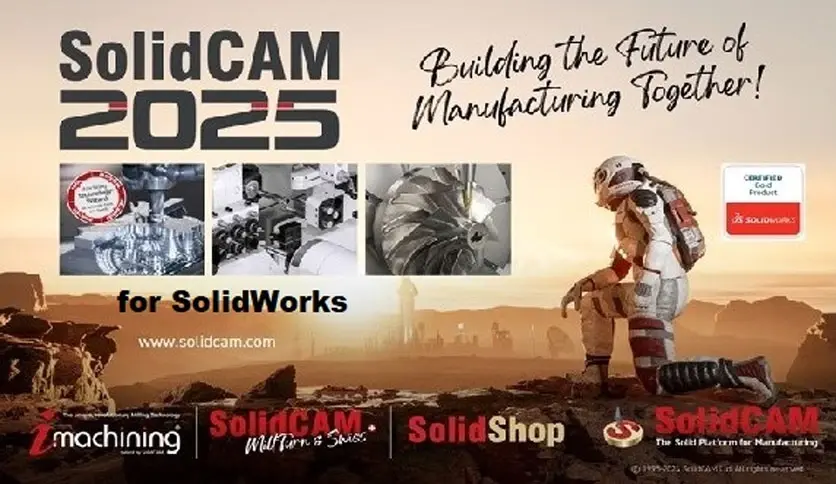
SolidCAM 2025 (v2025.0 SP1): Complete Guide for CNC Programmers and Manufacturers
What is SolidCAM 2025?
Overview of SolidCAM Software
SolidCAM 2025 (v2025.0 SP1) is one of the most advanced CAM (Computer-Aided Manufacturing) software solutions used for CNC machining and manufacturing automation. Designed to integrate directly inside popular CAD systems, SolidCAM allows engineers, machinists, and manufacturers to convert digital designs into precise machining instructions for CNC machines. Instead of exporting models between multiple software tools, SolidCAM runs inside CAD environments like SOLIDWORKS and Autodesk Inventor, enabling a seamless workflow from design to production.
Think of SolidCAM like the translator between design and manufacturing. Designers create a 3D model, and SolidCAM converts that model into optimized toolpaths and machine instructions. This process reduces human error, speeds up production planning, and significantly improves manufacturing efficiency. For companies producing complex parts—such as aerospace components, automotive pieces, and molds—SolidCAM plays a crucial role in reducing machining time and improving tool life.
The 2025 version with Service Pack 1 (SP1) brings new improvements, smarter machining strategies, and better performance compared to earlier releases. With enhanced automation, improved machining algorithms, and expanded modules, SolidCAM 2025 is designed to help manufacturers produce high-precision parts faster and more efficiently. This version continues SolidCAM’s mission of delivering an integrated CAM system that simplifies complex machining tasks while boosting productivity.
Why SolidCAM is Popular in CNC Manufacturing
In the world of CNC machining, precision and efficiency are everything. Even a small programming mistake can lead to costly material waste or machine downtime. SolidCAM has become popular because it reduces those risks by providing a fully integrated CAM environment within CAD systems. This integration eliminates the need for file transfers between different software tools, which often introduces compatibility issues or errors.
Another reason behind SolidCAM’s popularity is its powerful iMachining technology. This advanced machining method automatically calculates optimal cutting conditions based on material type, tool geometry, and machine capabilities. The result is faster machining cycles, reduced tool wear, and improved part quality. Manufacturers often report dramatic improvements in productivity after adopting iMachining strategies.
SolidCAM also offers a wide range of machining modules that support nearly every CNC operation imaginable. Whether you are performing simple 2.5D milling or complex 5-axis machining, SolidCAM provides specialized tools designed for the job. The software supports turning, mill-turn operations, Swiss machining, and high-speed surface machining, making it a versatile solution for both small workshops and large manufacturing plants. With its powerful capabilities and ease of integration, SolidCAM has established itself as one of the leading CAM solutions used worldwide.
Key Features of SolidCAM 2025 (v2025.0 SP1)
New Wire EDM Module
One of the most exciting additions in SolidCAM 2025 is the introduction of a Wire EDM module. Wire Electrical Discharge Machining (EDM) is a specialized manufacturing process used to cut extremely precise shapes from conductive materials using electrical sparks. This technology is widely used in industries like aerospace, medical equipment manufacturing, and tool-and-die production.
The new Wire EDM module allows users to create complex cutting paths directly inside the CAD environment. Instead of relying on separate EDM programming software, machinists can now design, simulate, and optimize EDM operations within the same platform. This unified workflow simplifies the programming process and reduces the learning curve for engineers and machinists.
Beyond convenience, the module also enhances machining accuracy. By combining CAD geometry with advanced machining algorithms, SolidCAM can generate highly optimized cutting strategies that minimize wire breakage and improve surface finish quality. The module supports advanced features such as taper cutting, multiple contour machining, and automated toolpath generation. According to SolidCAM release highlights, this feature is one of the most significant upgrades in the 2025 version.
For manufacturers dealing with complex geometries, this addition makes SolidCAM 2025 a much more comprehensive machining solution.
Smarter Pocket Recognition Technology
Another major improvement in SolidCAM 2025 is smarter pocket recognition. Pocket machining is a common CNC operation used to remove material from enclosed areas of a part. While it may sound simple, pocket machining can become complicated when dealing with irregular shapes or updated stock models.
SolidCAM 2025 introduces advanced algorithms that automatically detect pocket shapes and adapt machining strategies accordingly. The software now recognizes updated stock geometry more accurately, allowing it to adjust toolpaths based on existing material conditions. This means machinists can avoid unnecessary cutting passes and focus only on areas where material still needs to be removed.
This intelligent recognition system improves machining efficiency and reduces programming time. Instead of manually defining every pocket or editing toolpaths repeatedly, engineers can rely on SolidCAM’s automation to handle much of the process. The result is a smoother workflow and fewer chances of programming mistakes.
For shops that handle multiple design revisions or complex parts, this feature can dramatically improve productivity. By reducing manual adjustments and automating pocket recognition, SolidCAM helps machinists focus more on optimization rather than repetitive programming tasks.
Enhanced Multi-Depth Drilling
Drilling operations are among the most common processes in CNC machining, but they can also be time-consuming when dealing with deep holes or multiple layers of material. SolidCAM 2025 introduces enhanced multi-depth drilling capabilities that improve both speed and accuracy during drilling operations.
The upgraded drilling module allows programmers to define multiple drilling depths with greater control. Instead of performing repetitive operations for each depth level, machinists can program complex drilling cycles in a single operation. This significantly reduces programming time while maintaining precise control over tool movement.
Another advantage of the improved drilling system is its ability to optimize chip evacuation and tool cooling. Deep drilling often causes heat buildup and chip accumulation, which can damage tools or affect part quality. SolidCAM’s enhanced drilling strategies address these issues by optimizing drilling cycles and retract movements.
For industries such as aerospace, automotive manufacturing, and mold making—where precision drilling is essential—these improvements can lead to better machining performance and longer tool life.
Advanced Chamfer Operation
Chamfering is an essential finishing operation used to create beveled edges on machined parts. While chamfering might seem like a minor step, it plays a critical role in improving part quality, safety, and assembly compatibility.
SolidCAM 2025 introduces a new advanced chamfer operation that provides more control over edge finishing. Users can now define chamfer dimensions more precisely and apply them to complex geometries with minimal manual adjustments. This makes it easier to produce consistent edge finishes across multiple parts.
The updated chamfer operation also integrates with other machining strategies, allowing users to include chamfering automatically within the machining workflow. Instead of creating separate operations for each edge, machinists can integrate chamfering into the overall toolpath strategy.
This improvement reduces programming complexity and ensures a more streamlined machining process. For manufacturers producing high-precision components, even small improvements like these can make a significant difference in productivity and product quality.
Powerful CAM Modules in SolidCAM 2025
iMachining Technology
At the heart of SolidCAM’s success lies its revolutionary iMachining technology. Unlike traditional machining strategies that rely on fixed cutting parameters, iMachining uses advanced algorithms to calculate optimal cutting conditions automatically. It analyzes factors such as material hardness, tool geometry, machine capabilities, and part geometry to determine the best possible machining strategy.
The result is faster machining cycles and significantly improved tool life. Many manufacturers report that iMachining can reduce machining time by up to 70% compared to conventional machining methods. While the exact performance improvement depends on the material and machine setup, the technology consistently delivers better efficiency and reliability.
iMachining also simplifies programming for machinists. Instead of manually calculating feeds, speeds, and cutting depths, users simply input the material type and desired machining strategy. The software then generates optimized toolpaths automatically. This not only saves time but also reduces the risk of human error.
Because of its ability to maximize machining efficiency, iMachining has become one of the most recognized features of SolidCAM. It continues to evolve with each new software release, making SolidCAM a powerful solution for modern CNC manufacturing.
Multi-Axis Milling and Turning
Modern manufacturing often requires machining parts with complex geometries that cannot be produced using simple 3-axis operations. SolidCAM 2025 supports advanced multi-axis machining, including 4-axis and 5-axis milling operations.
Multi-axis machining allows CNC machines to move tools along multiple directions simultaneously, enabling the production of highly complex parts with fewer setups. This reduces machining time and improves part accuracy because the part remains fixed while the tool moves around it.
SolidCAM’s multi-axis capabilities include simultaneous 5-axis machining, indexial 4/5-axis operations, and high-speed surface machining. These features are essential for industries like aerospace, medical manufacturing, and automotive engineering, where complex geometries are common.
Swiss Machining and Mill-Turn
SolidCAM also supports Swiss machining and mill-turn operations, which are widely used for producing small, high-precision components. Swiss-type machines are especially popular in medical device manufacturing and watchmaking industries.
The mill-turn module allows users to combine milling and turning operations in a single machine setup. This eliminates the need to transfer parts between different machines, reducing production time and minimizing alignment errors.
Integration with CAD Platforms
Integration with SOLIDWORKS
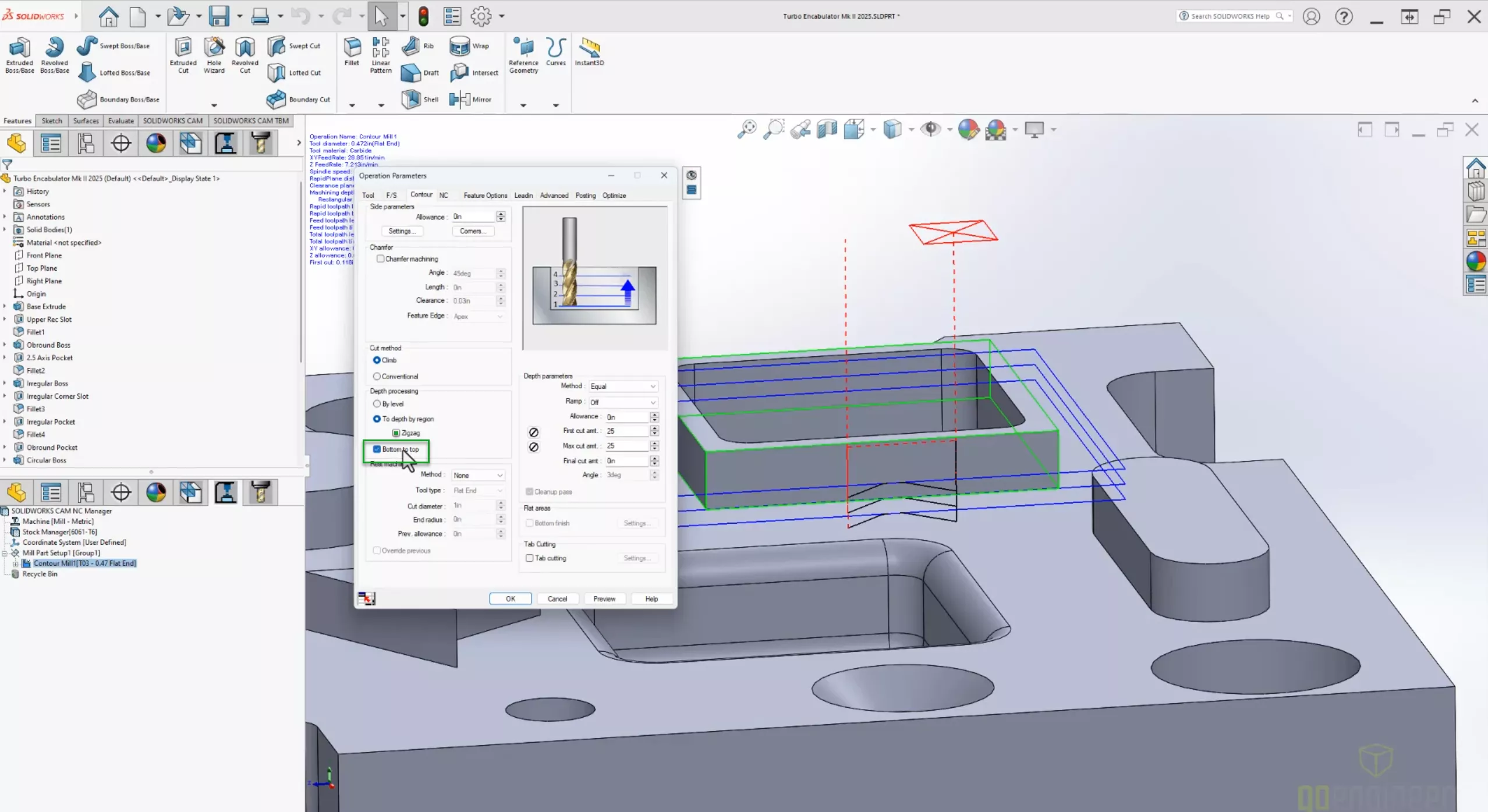
One of SolidCAM’s biggest advantages is its seamless integration with SOLIDWORKS. The CAM system runs directly inside the CAD environment, allowing users to design parts and program machining operations within the same interface.
This integration eliminates the need to export files between different software platforms. It also ensures that any design changes automatically update the machining operations, saving time and reducing programming errors.
Integration with Autodesk Inventor
SolidCAM also integrates with Autodesk Inventor, providing similar benefits for engineers who prefer that CAD platform. The unified environment allows users to design parts, define machining strategies, and simulate manufacturing processes without leaving the CAD interface.
Performance Improvements in SolidCAM 2025
Faster Toolpath Calculations
SolidCAM 2025 introduces improved algorithms that significantly accelerate toolpath calculations. Complex machining operations that previously took several minutes to compute can now be generated much faster, allowing machinists to test multiple machining strategies quickly.
Improved Toolkit and Setup Sheets
The updated version also includes an enhanced ToolKit with new tool types and improved setup sheet generation, making it easier to document machining processes and share instructions with shop-floor operators.
System Requirements for SolidCAM 2025
Running advanced CAM software requires a powerful workstation. Below is a simplified overview of the recommended hardware specifications.
| Component | Minimum | Recommended |
|---|---|---|
| CPU | Intel i5 / AMD Ryzen 3 | Intel i7 / Ryzen 5 or higher |
| RAM | 16 GB | 32–64 GB |
| GPU | NVIDIA T1000 | NVIDIA Quadro series |
| Storage | 256 GB SSD | 512 GB – 2 TB NVMe SSD |
| OS | Windows 11 Pro | Windows 11 Pro |
These specifications ensure smooth performance for complex machining operations and simulations.
Benefits of Using SolidCAM for CNC Programming
Using SolidCAM provides several advantages for manufacturers and machinists. The software reduces programming time, improves machining efficiency, and minimizes the risk of errors during production. Its advanced simulation tools also allow programmers to verify toolpaths before machining begins, preventing costly machine crashes.
Another major benefit is the software’s scalability. Small workshops can start with basic modules such as 2.5D milling, while larger companies can expand their capabilities with advanced modules like 5-axis machining and mill-turn operations.
SolidCAM 2025 vs Previous Versions
Compared to earlier versions, SolidCAM 2025 focuses heavily on automation and smarter machining strategies. Features like improved pocket recognition, enhanced drilling cycles, and advanced chamfer operations provide better efficiency and easier programming.
The addition of new modules and improved performance also makes this version more powerful than previous releases. Manufacturers upgrading from older versions will notice faster toolpath calculations and improved workflow integration.
Conclusion
SolidCAM 2025 (v2025.0 SP1) represents a major step forward in modern CNC programming and digital manufacturing. With powerful new features such as the Wire EDM module, smarter pocket recognition, enhanced drilling strategies, and improved multi-axis machining capabilities, the software continues to push the boundaries of CAM technology.
By integrating seamlessly with CAD systems and providing intelligent automation tools, SolidCAM helps manufacturers produce complex parts faster and more efficiently. Whether you are a small machine shop or a large manufacturing company, SolidCAM 2025 offers the tools needed to stay competitive in the evolving world of digital manufacturing.
FAQs
1. What is SolidCAM 2025 used for?
SolidCAM 2025 is CAM software used to create CNC machining toolpaths from CAD models, allowing manufacturers to produce parts using CNC machines.
2. Does SolidCAM work with SOLIDWORKS?
Yes, SolidCAM integrates directly with SOLIDWORKS, allowing users to design and program machining operations within the same environment.
3. What is iMachining in SolidCAM?
iMachining is an advanced technology that automatically calculates optimal cutting conditions to improve machining speed and tool life.
4. What operating system is required for SolidCAM 2025?
SolidCAM 2025 typically runs on Windows 11 Pro with modern workstation hardware for optimal performance.
5. Is SolidCAM suitable for beginners?
Yes. While it offers advanced features, SolidCAM also provides an intuitive interface and automation tools that help beginners learn CNC programming faster.
🤖 Pass AI Detection instantly.
Great article! Now make it undetectable. Turn this text into 100% human-like content that ranks higher.
👉 Humanize Now (Free) — Bypass AI detectors with one click.
Explore more tools by joining me on Patreon
✨ Get better articles, faster. This prompt is powerful. But Pro Article Writer takes it further — AI humanizer, SEO tools, full editor, one-click options, and more control all in one place. Try it free →